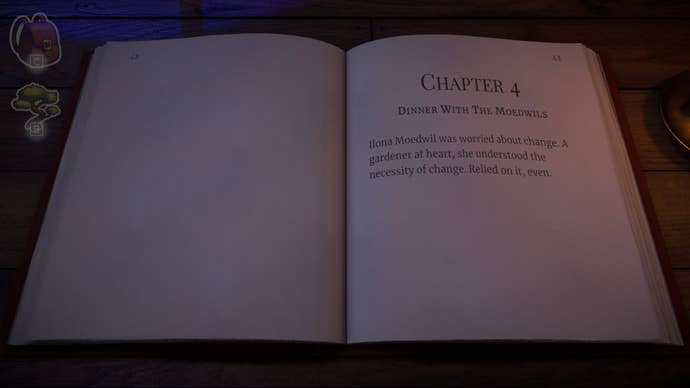
As you explore the down-on-its-luck farming town of the title, you discover ‘charms’.
Except, Beacon Pines is far less choice-driven than I expected.
You control Luka, a twelve-year-old who possesses several main character tragedies.
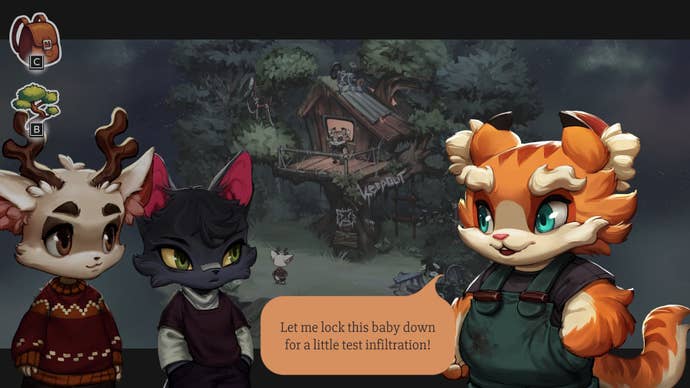
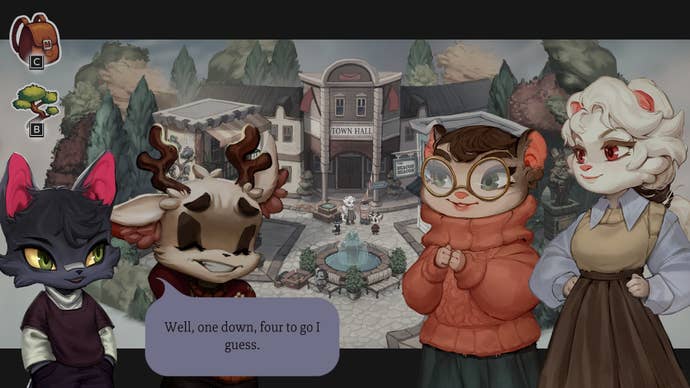
Characters make jokes when appropriate, but those jokes are never winking, referential or glib.
They felt real and it ultimately made it easy to care about them.
To be clear, its plot beats are never graphic or grotesque.

It’s in many ways the perfect game to play as the nights draw in and Halloween approaches.
It is you, the player, who is shifting between these timelines and not Luka.
This means you know things your protagonist does not.
Those words also offer no indication of what impact they might make on the story.
In one instance, you choose whether rain should get worse or stop.
In another, you choose whether Beck should tickle your bullies or simply act “strange”.
These decisions are a butterfly flap that produce completely unknowable consequences.
I’m not mad.