At a glance, and for the first hour or two, much remains the same.
The game involves alternating between tactile machine management and slow, gentle transit over gorgeous, painterly landscapes.
This familiarity is by no means a criticism.
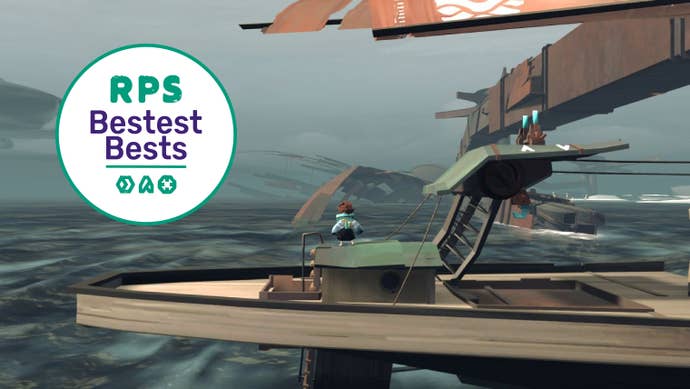
Changing Tides takes place in a similar post-apocalyptic setting but unlike the first, its not quite as tranquil.
Lone Sails was a world broken but almost at peace, moving on pleasantly without human rule.
(Players who finish the game will surmise this not to be literally the case).

But I love this little dudes energy!
That big fluffy hair?
He’s just doing his thing.
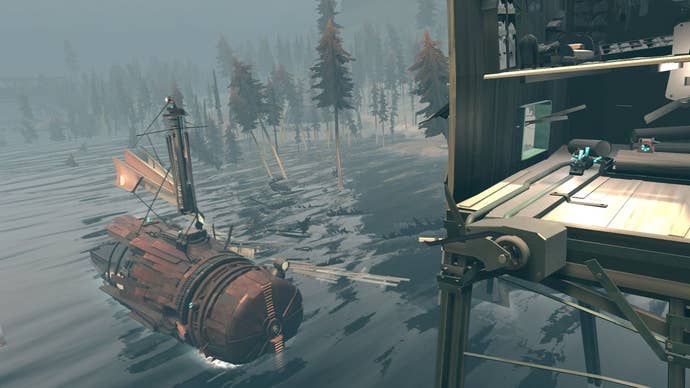
The good vibes he exudes are a contrast to this crumbling world, which has a pervasive melancholy.
Or perhaps moving on from that loss.
It’s a bit of a different atmosphere, is the thing.
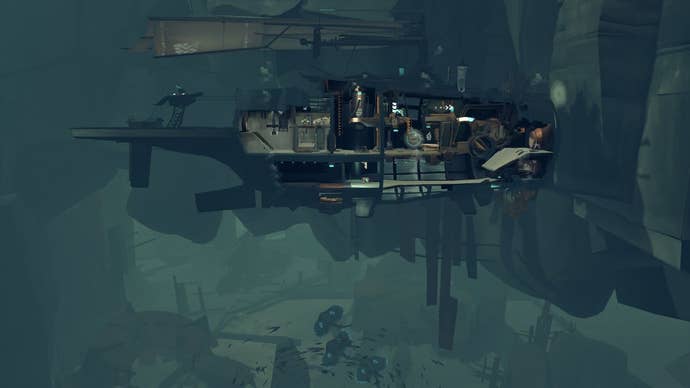
I was upset when I had to sacrifice a little music box to keep us going through a storm.
Especially since Changing Tides throws a lot of different obstacles in your path.
You get properly rooted in its world.
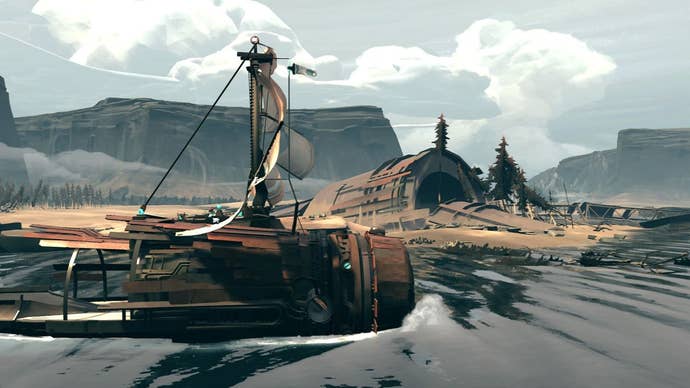
“, like a big kid who’s gotten their first toolbox.
Childlike sensibilities are a defining part of the game.
If you got this ship as a toy as a child it would be your favourite one.
It taps into a potent kind of wonder as effortlessly as the first.
A vehicle powered by toys and fun.
Of course some frustrations return, albeit slightly eased.
Because it does surprise, especially towards the end, taking you to exhilarating places.
Hardship is more central to Changing Tides than Lone Sails.
It moves backwards in time to the apocalypse while we move forward to meet it.
Reconciling that unease is not something it treats lightly, yet there is still hope to be found.
I’m grateful for that.
