(They do not.)
The harbingers of a confident, slash-happy action game, and another poppy adaptation of classic Greek japes.
Something sinister has happened in the underworld (no way!)
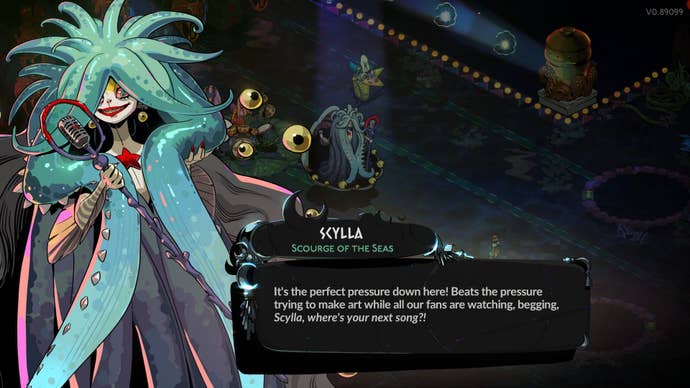
and the pantheon of Gods is in disarray, along with all attendant heroes and hellions.
Zagreus, our nippy protagonist of the previous game, is missing in action.
So is helldaddy Hades and various others.
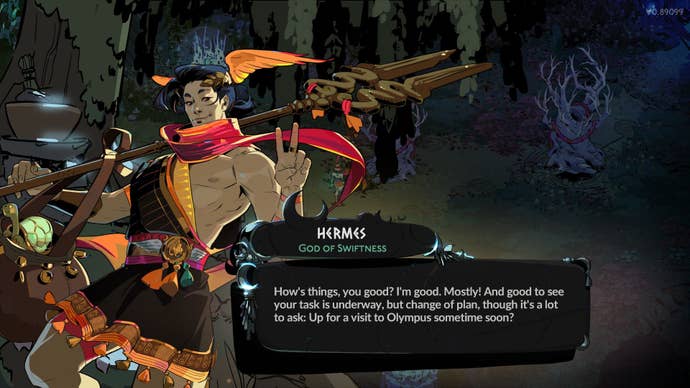
Into this absence steps Melinoe, forgotten baby sister of Zag.
Off you go on a dungeon-running jaunt of encounters, boss brawls, boon scrounging, and character questioning.
Newcomers will find their feet quick enough thanks to straightforward tutorialising.

At least when it comes to hacking and/or slashing.
As for the story, there might be more head-scratching.
Even so, the sequel definitely benefits from at least some existing knowledge of the previous cast.
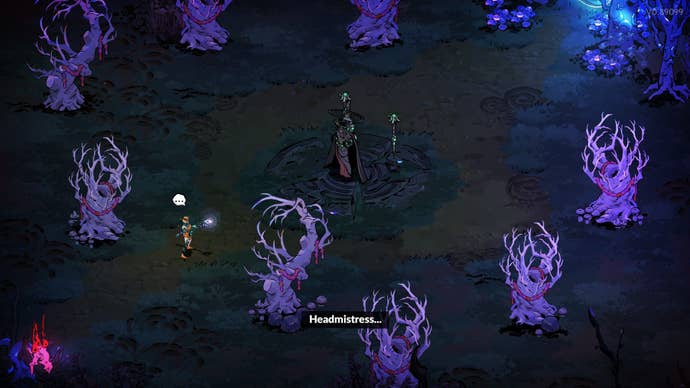
Not that the current cast disappoints.
The voice acting is satisfying and clean.
Other actors put in the work.
The skeptical harrumphs of Becca Q. Co’s Nemesis.
There’s a lot of fun to these performances.
Then she dashes off, blocking one path and stealing your choice of doorways away from you.
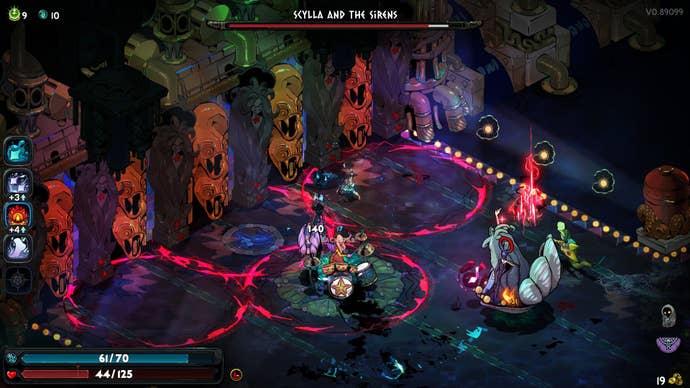
A wonderful jerk move.
But the biggest teller of the game’s confidence is in meeting Narcissus.
You see, unfinished character designs currently appear as a dark figure in a placeholder shroud.
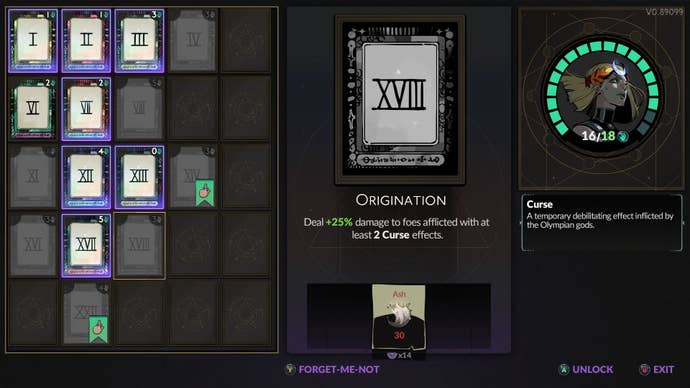
Some of these gods are so hot, you dare not yet look upon them.
But I hear you.
You bray to know of the game’s violence.
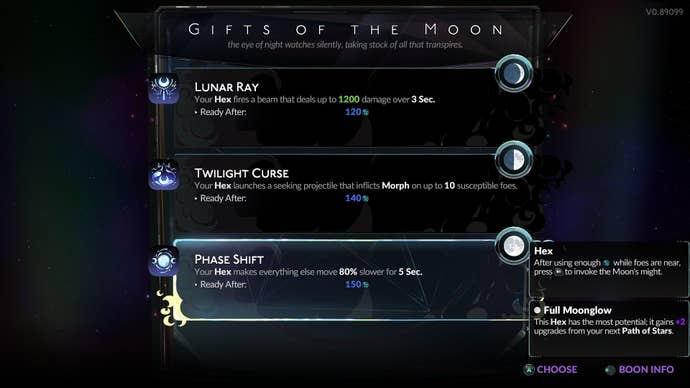
You have more tricks up your bare arms than Zagreus did.
I’m getting the most out of Melinoe’s broad and debilitating Cast ability.
But Melinoe instead gets a wide area-control ward that stops enemies in their tracks.
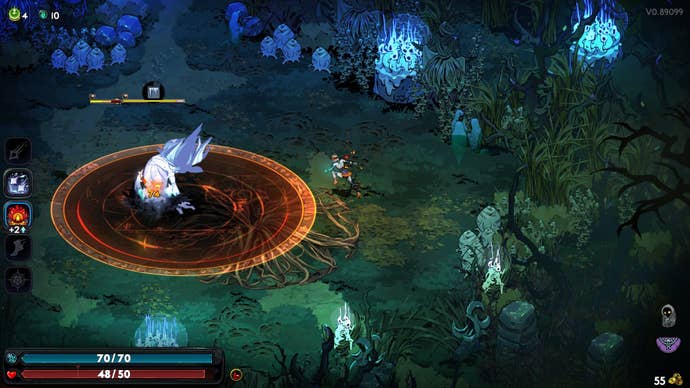
It’s a case of having old problems with some new solutions.
These room-by-room scraps do feel, to my taste, more controlled than in the first game.
But the sense of gut-following amid pressure is the same.
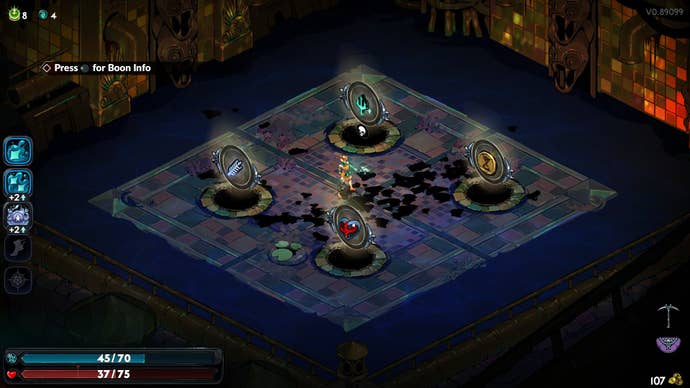
Pat off the dust, you’ve just earned a boon.
This is where the on-the-hoof character builds come in.
We’re still deep in roguelike turf after all.
As in OGHades, boons are tokens sent by the Gods which buff your usual moves in some way.
Many supplement that jealous control of space.
A boon from Demeter lets you freeze enemies in place with distant knife throws, for example.
One of Poseidon’s powers grants your normal attacks a splashing knockback effect.
Another augments your sprint with a blast of minty fresh air, repelling all foes you pass by.
Others focus on hurt.
Other gods may grant bonuses like a speedy restoration of your magick in exchange for a much shorter bar.
There is a trade-off, though.
It’s basically like enacting the “make it rain” gesture.
But instead of blithely upending stacks of paper money you are spamming arcane death.
Those dungeon dives are only part of the craic, of course.
That to-do list of arithmetic did start to feel a bit overwhelming.
But then again, I hate sums.
There are quality of life things to help with this.
At the cauldron you could mark recipes with a “forget-me-not”.
It’s a small but helpful touch that I don’t remember from the first game.
Environmental conditions also cause certain items to crop up more often.
Rainfall, for example, means you will find lots of mushrooms.
It all adds more depth to the rando-gen possibilities of a run.
As with the first game, I like it less the more bullet hellish it gets.
The trade-off for beautiful and flashy effects is that sometimes the battle becomes hard to read.
Much of this is a matter of getting used to exact splash ranges of gassy attacks.
Sometimes you’re simplycertainyou weren’t in range of that puff of scarlet smog.
But it’s encouraging that these worries are so few and far between.
Roguelikes, I feel, don’t suffer as much as other genres from the early access path.
The first Hades did it and it quickly became one of ourbest action games.
The piecemeal, adaptive storytelling is still there too, eschewing anything so simple as the classic three-act structure.
Which, for me, makes long absences that much easier to bear.
